Showing posts with label design. Show all posts

7.29.2011

Fancy Free Friday

I've been off the grid this past week. Okay not really, but I have been sort of unplugged and sort of distracted with vacationing. It all started with some insect much smaller than me that's been feasting on my house for who knows how long. Due to financial uncertainties, this was the summer to get stuff done. The last hoorah to buy toys and fix up the place. So I paid a professional to shoot poison through my entire house and skipped off to a locale even warmer than my own to enjoy some time off from MegaCorp. I'm pretty sure I forgot how to be an engineer in the meantime, but oh well I'll worry about that later.
 
TechCat got to spend the week rooming with three dogs and while she got some love and attention she seems to be pretty happy to be home again. Or, I'm guessing that's why she woke us up multiple times during the night to make sure we were still there and she was still there and we weren't going to ship her off to the doghouse again.
 
In honor of my absent design fridays post today, I wrote about Lockheed's HALE-D unmanned airship over at EngineerBlogs. Hope you are all as well rested and even keeled as I feel today (even having to go back to earning my paycheck again). I raise a toast to you and your weekend so we can focus on alcoholic beverages or tasty non-alcoholic beverages and fondly remember days when insects are our worst enemies and having no financial ruin that lay ahead and politicians who we can't tent out of our house. Oh I ruined it already didn't I. Have another drink.

7.15.2011

Design Fridays: A Successful Design

Over at Engineer Blogs today I'm talking about the Key to a Successful Design and asking whether confidence plays into presenting your solution and getting it reviewed and approved. Last week I talked about the Army's Biometrics Device they are using in Afghanistan and the week before was compressor design.
 
I'll pose the same questions here; do you think it's more about being confident than having a good design? Does attitude and how you present yourself factor in to whether people will back you? Is that a good thing or a bad thing?

6.10.2011

Design Fridays: Volvo's new flywheel

Volvo's claiming their new flywheel design will be able to give a four cylinder the equivalent of six cylinder power as well as save 20% of combustion energy.
 
A flywheel is just a name for a rotational device that's able to store energy. It does this by using inertia and saving rotational energy. The amount of energy that can be stored is based on the moment of inertia and rotational speed, where moment of inertia is based on mass and radius of the wheel. Typical flywheel designs might include differing weights at certain points in the wheel that help keep the rotational speed more consistent and higher.
 
In your typical automotive application, a flywheel sits on the end of your crankshaft and converts the energy and movement of the crankshaft into a more consistent rotational speed.
 
Volvo is claiming that their flywheel will be able to store so much energy that when the engine is idling it can actually turn off and the energy stored in the wheel is enough to start combustion again. If so that could explain their 20% fuel savings number as engine idling is a well known waster of energy (why electrical cars and the Prius shut off at a stop). The flywheel also sounds like it is using aspects popular in hybrids and electric cars: regenerative braking. There've been a lot of attempts to incorporate regenerative braking into designs, the idea that you can get back part of the energy you're wasting to brake. But generally these designs haven't been efficient enough to be practical (plus once you add complications, you add more room for failure, and the more components the heavier your car thus reducing your energy savings).
 
They're supposed to start field testing this sometime later this year.

6.07.2011

Leave Your Mark

An interesting gallery of John Rennie's engineering legacy. A scottish civil engineer in the 18th and 19th centures he was responsible for design of many canals, bridges, waterways, docks and harbours scattered around Great Britain. When we look at great buildings and wonders we don't always think of the engineer who designed it but they are as much a part of it as the society, labor and technology that went into the construction.

4.29.2011

Design Fridays: Engine Runs on your Dreams

Cyclone Power is developing the Mark V engine and claiming it can run on "almost any fuel." In actuality it looks a little like a lawnmower engine in size. In principle it runs off a rankine cycle or regenerative heat cycle or, they claim, a Schoell Cycle named after the inventor who originally developed the cyclone engine. Rankine follows a four step process:
  • 1 ->2 Fluid in liquid stage pumped to high pressure
  • 2 ->3 Heated at constant pressure, becomes a saturated vapor
  • 3 ->4 Vapor goes through a turbine, generates power
  • 4 ->1 Vapor enters a condenser and becomes a saturated liquid
I'm a bit skeptical as to their claim of this being anything "new" or being able to run on "any fuel." I talked a bit on Engineer Blogs about diesel and the way a compression ignition engine versus a spark ignition engine functions are pretty different. Just because their engine might have some flexibility does not mean it wouldn't lose a lot of its efficiency depending on what the working fluid is. They're claiming they can use algae or waste oil as fuel but honestly this is nothing new. Most diesel engines can be easily (or fairly easily given you have time and know what you're doing and have a little money for parts) modified to run on many other kinds of fuel. That's the whole point of biofuel, it runs in engines we've already designed and are using. Especially in large vehicles and trucks which still account for a huge percentage of our transportation costs for shipping product in this country.
 
Getting all that aside, I do think it's interesting. You don't see a whole lot of radial engines these days. Combining it with a rankine-type cycle and focusing on growing demand for biofuel power generation devices is probably pretty prescient. But there's reasons we don't use external combustion engines in our cars or airplanes so we need to keep looking for practical solutions for that fit our society for both cost and environmental reasons. And maybe something like this can be a part of it.
 
I think hydrogen engines are promising (maybe that's a whole future post?) and while small, solar powered stations might work for individual's cars it won't serve as a substitute for the whole power structure. Clearly we need diversity in our power solutions and maybe this clever little engine can be a part of that.

4.20.2011

2012 Mustang's Dials

Simple, elegant. Almost art deco. Interior lighting can make them blue and more modern looking if that's your thing.
 
Test drove an SS Camaro and a Mustang GT a few weeks back. More to come, but this camaro-lover really dug the Mustang's design style.

4.08.2011

Design Fridays: Ideal Coffee Temperature

A new entrepreneurial approach to that perfect cup of coffee in the morning: Coffee Joulies.That largish, metallic "coffee bean" is not just a paper weight to say how much you love coffee. Supposedly it's filled with a phase-changing substance that will both quickly cool your coffee to an ideal temperature and then keep it from cooling quite as fast after that. Though I find the reference to it being filled with a phase-changing material a little non-specific and bordering on marketing woo. I mean, water is a phase changing substance.

Some sites have said metal is in it, which is possible, though all the makers are willing to say is that it is an FDA approved substance. Remains to be seen how effective they are (compared to say, little spheres of metal that might have the same affect because they are thermally conductive: soak in the heat of the coffee to cool it to a certain temperature quickly, then retain the thermal heat therby not allowing it to cool very fast). But I do agree they are cool looking which is half the battle, so that's why I'm showing them here. Cooling looking coffee bean paper weights. Maybe they work better any other thermally conductive substance at keeping your coffee in the ideal temperature range. Maybe they don't.

3.21.2011

Future of Spaceflight: No single point sollution

Too often we look for a single perfect answer to our problems. In the energy crisis people are often disappointed when hybrid batteries are found to be so environmentally unfriendly or that wind power is often incredibly harmful to local bird life or that solar cell arrays often use a lot of water in areas that are pretty arid to begin with.

Researchers looking into the future of space flight looked at combining a rocket propellant with an electric sail. An electric sail has some similarities to a solar sail in that they are both low mass propulsion systems however a solar sail uses the acceleration of photons to create slight accelerations to the apparatus while an electric sail uses an array of long, thin positively charged tethers that repel solar wind protons while attracting solar wind electrons. These arrays have all been proposed as a method of space flight that would require no additional propellant as accelerating and decelerating more mass requires more wasted energy. However an electric sail would only function in space and the gains to acceleration can sometimes be minute.

The researchers used the Hohmann transfer numbers as a starting point for interplanetary travel between Earth and its neighbors. Typical planet to planet rendezvous would include a period of time where the spacecraft was accelerating to give it a necessary velocity delta to escape Earth's orbit, then a period where it would coast to reach the orbit of the planet it's attempting to reach. Minimum flight times were calculated for this basic transfer orbit as between 0.289 years to reach Mercury and 30.613 years to reach Neptune.

The authors looked an ideal thrust-on time in comparison to minimum flight time because while shortest flight would generally be ideal you would also want to reduce your thrust time in case of your propulsion system failure. So it was better to look at a ratio between the two. They looked initially at having a secondary thrust phase after an initial coasting phase but found using the total time and thrust time ratio meant it was always optimal to have only one thrust phase followed by a coasting phase.

Their initial starting point was an object in circular orbit around the earth to which they then simulated times it might take that object to reach planets in the solar system using either a typical rocket propulsion system or the hybrid rocket and electric sail option. In the first option the rocket propellant and inertia allow it to reach the escape velocity. But in the case of the electric sail, the sail's acceleration can contribute during the thrust time towards achieving the delta velocity which of course reduces the amount of propellant the spacecraft would have to carry. I summed up their results in a slightly more clear graph.

Perhaps not surprisingly flights to Mercury and Venus were worse with the hybrid system. Though, an electric sail only system would save considerable fuel and mass and could be considered to Mercury and Venus. The major time savings were seen the farther out into the solar system. The hybrid system doesn't solve long term space flight concerns but it does add another weapon to our arsenal that perhaps future spaceflights will employ multiple methods of propulsion.

Quarta, A., Mengali, G., & Janhunen, P. (2011). Optimal interplanetary rendezvous combining electric sail and high thrust propulsion system Acta Astronautica, 68 (5-6), 603-621 DOI: 10.1016/j.actaastro.2010.01.024

3.07.2011

Humanoid Robots

Or how foolish scientists will open the doors to Skynet and a future in which we run from robots trying to kill us. Perhaps literally so. Boston Dynamics, who brought you the infamous "Big Dog" robot (here's a video) have been in the news this past month for the DARPA funding of their new cheetah robot. Supposedly the thing is designed to chase down human prey. Luckily in CAD form it looks less menacing so far.

I have been thinking about the Uncanny Valley in robot design lately. I like Disney's Wall-E and of course I'm waiting for this KeepOn robot to go on sale so I can purchase him and have more moments of squee in my day. But then robots go past the divide. There are plenty of scary looking singing Japanese robots out there. Even a German company has gotten into the race with their "fembot" that can lift things and do factory work. [As an aside, I hate how we have to sexualize all our robots. "Dude-bots" are not called "man-bots" or whatever, if it looks male it is male and the difficult and that doesn't need to be mentioned. In this case I'm not even sure why the AILA was given some approximation of plastic human female hair and vaguely human female curves. Reminds me of the exec in 30Rock complimenting Liz Lemon on being "a good businessman." "You mean businesswoman?" "I'm pretty sure that's not a word."]

While Boston Dynamics was busy making a robot that would hunt down human prey (I'm not sure what kind, or why...terrorists? illegal aliens? Convicts when we finally implement a "running man" or "the gamer" type of future where falsely convicted hero-types must compete for their freedom and lives on a gladiator-like gameshow that bloodthirsty Americans just eat up?). You might have missed their introduction of a bi-pedal robot, ATLAS.

Boston Dynamics already has a two-legged robot, and the video is seriously creepy. It doesn't help ATLAS looks like a freaking Terminator but imagine it walking around non-chalantly like their existing robot Petman and you'll see what I mean with uncanny divide. When the operator shoves him to the side (see me using masculine pronouns for this thing? dammit) I really expected the robot to finally go psycho after being pushed around one too many times and kill the guy.

It's only missing a nice big HAL light on the front of it. So sure Boston Dynamics I'm impressed. But I'm also creeped out. I'm going to go back to watching your snake robot and this weird climbing robot that looks like a lizard. I bet audiences in the 1980s seeing the movie Terminator for the first time wondered how stupid humanity could be that it created the thing that became self aware and destroyed us. But now I see it! We'll make them for coolness factor! Coolness factor is going to be humanity's downfall. Good thing my fallout shelter doubles as robot defense shelter.

2.20.2011

Weekend Projects

Cleaned out my garage this weekend. I'm getting ready to build my workbench (Chris Gammell working on his this weekend helps the inspiration). Of course when you start digging through your garage you find all these pieces you saved for some other project you haven't even started yet. Notably the nice fabric to reupholster my dining room "bar" chairs. Given to us by my inlaws when we moved in they were really perfect for the backside of the countertop in the kitchen. But the seats themselves had seen better days.
That's cat fur all over the top of it and a huge tear in the side with the foam trying to battle its way out. My parents had given me this great selection of fabric to choose from so I went with this nice black patterned fabric. Now I think the seats make the chairs look more obviously worn, but it's starting to look like adults actually live in this house instead of a few rejects from the Lord of the Flies.
Pretty good for free, right? Also if someone's looking for a server rack you can stop by my garage, because I have one I really need to get rid of. There's a limit to projects and what you think you will do with the items you save, after a while you just have to give up for the sake of a cleaner garage. I'll post more garage pictures later when the workbench construction starts, but that's for another weekend.

1.28.2011

Design Fridays: That's a big prop

The small UAV market is smoking hot. Boeing has a high altitude long endurance (HALE) they'd like to sell to someone. And they're not exaggerating in taking on the HALE acronym, it can reach an impressive 65,000 ft altitude and supposedly stay aloft for up to four days. It's doing some final ground testing now before actual flight testing commences so we'll see the truth in their claims rather soon. Powered by two engines it will also have two really big propellers. 16 ft in diameter big. It dwarfs the not insignificant 2.3L engine that powers it. Here's a video of their ground testing with the prop:


I'd like to see the prop map on that. What's a prop map you ask? Well when designing a propeller the contour of the blade lends itself to a certain efficiency at certain airspeeds and altitudes. There is no one blade that will work for every aircraft so you take a known propeller and its efficiency curves and map it out into little efficiency islands.
Then you can take this information and figure out where your aircraft would perform and how efficiently the prop is doing at various airspeeds and altitudes (air density is what's important here) and compare how efficient your prop is at your max takeoff speed or at your high altitude cruise speed as in the table below.
Given Boeing's Phantom Ray has two engines and two props I wonder if the redundancy allows it to stay up in the air if one engine fails like many larger military or passenger aircraft. At the least I think this is the start of higher expectations for UAVs where once 20-30 hours was considered an endurance flight I expect that will be too short of flight time going forward.

1.27.2011

DARPA Thursdays: Underwater Sensors

A lot of DARPA's interesting marine projects relate to anti-submarine warfare, like this pilotless ship I talked about last year. Now they're looking for an underwater sensor array. I've done some quick CAD of what this might look like, as seen in the photo above. Underwater arrays are nothing new. They can look like buoys, capsules floating underneath the surface, they can even be disguised in something that looks and floats like kelp.
Here DARPA has in mind something that would be in deep ocean, at or near the bottom. This brings to mind my rough idea for a series of pressure resisting domes you could drop to the ocean floor. Sensor arrays are kind of a neat thing to begin with, a bunch of nodes communicating with each other and sharing information. So its a two fold problem of designing something that's mechanically hardy in not only high pressure environments but also cold, corrosion and have to be long lasting or incorporate some clever mechanism to surface itself and be easy to replace.
Working in the ocean is not unlike working in space; you can send your hardware into it but if something fails it's best to have as many possible methods of fixing it from a distance as possible. Meaning communication between nodes and to your surface point would not be trivial. And by the way the FBO is written you can tell DARPA's not looking for amazing innovation, they're just looking for something that works. Seems like a good opportunity for a small interdisciplinary unit to make something effective.

1.26.2011

Face Time

How can I get shit done when you keep inviting me to more meetings?
Or the alternate title, me goofing around with excel instead of doing all the work I should be and am complaining about being overwhelmed with.
But really, the chart design elements in Micrsoft's Excel 2007 are pretty sharp. They make my data look like Fucking Data, man! I'm easily impressed. But then most of the people who read my powerpoint presentations share that same quality.

1.24.2011

Designing the Collapsible

For my senior project one of the big challenges is trying to flatten the thing we are designing. There are a whole lot pieces of technology out there, though one doesn't traditionally think of using it to fold structures, but in this case that's what we're looking for.

I started off with McMaster Carr, my favorite one stop shop for the discerning mechanical or manufacturing engineer. I'm waiting on an order right now, with a press button incremental hinge, an adjustable friction hinge, and a lever lock hinge.


But another great way to get some inspiration is by heading to your local hardware store, or even your local outdoors/camping store. We found a slot hinge used for folding a chair which was something I had considered. Only problem is our structure is not very large, and these act like a brace in the corners so it can take up quite a bit of room.

We also found a rounded hinge that was used for a camping table and the spring wire/slotted structures that you usually see on pop up tents.


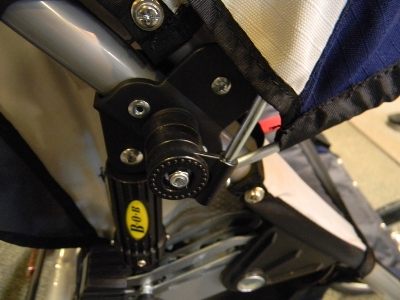
My favorite find, however, was the radial hinge from a jogging stroller. If you can picture the collapsible top of a stroller with rounded supports that allows it to fold close almost like an accordion you can see where this radial hinge fits in.
There's something to be said for looking to the latest research or the most new and advanced manufacturing techniques but there's also an advantage to checking out basic consumer products that are already out there and seeing where inspiration strikes. You never know what simple mechanism did not occur to you in your hunt to optimize your design. Of course, this might be a bit too simplified if you're dealing with a failed water pump or something a bit more complex but if you're thinking for a prototype don't be afraid to stop by your local hardware store just to browse. You never know what you'll see.

1.08.2011

S is for Saturday and Sleek

Tesla Motors plans to release it's luxury electric Model S sometime in 2012. On the outside it looks a lot like you might expect for a luxury sedan. It's got the smooth curves you'd expect to see in a current model luxury sedan, not unlike the designs that are going into a new Infinity or Cadillac. Unlike Tesla's other famous model, the Roadster which was built from a Lotus skeleton, this body chassis is an original design. Given how expensive the technology for a a decent range all electric vehicle is it makes sense Tesla would be pursuing a luxury model meant to compete with the BMWs and Audis of the world.
 
But despite its very aesthetically pleasing exterior and typically plush looking interiors this remains an interesting car in that they are advertising it will be able to travel 145, 230, or 300 miles on a single 45 minute charge depending on which battery pack you purchase. As someone who fills up about every 300 miles that is getting impressively towards normal consumer use. And you don't even have to go to the gas station, you can plug in at home. Unfortunately for now this sort of thing is going to be out of reach from the typical consumer. I've seen in the mid-50s for pricing which is of course more expensive than the mid-30s you could probably spend on an otherwise similar petroleum fueled internal combustion powered sedan. But for now, the engineering is impressive. Stop by ElectroVelocity for some interesting videos on the design and technology that went into the Model S.

1.07.2011

Design Fridays: Starbucks Logo

The picture above shows the ever changing face of a Starbucks cup of coffee. Now there's even a new logo and they are dropping the words. What do you think? I like the efforts to make the logo more simple, but I don't think the Starbucks mermaid has enough strength in brand symbol recognition to stand on its own. And coffee is such a nice word, evoking such wonderful mental images and emotions for us addicts, removing the word seems almost sad.
 
So +1 for simplicity but -1 for promoting the brand. Any other thoughts on this, what does everyone else think?

12.03.2010

Design Fridays: Mimicking Nature

Two researchers, from South Africa and California, have designed what they think will be a more aerodynamically efficient plane. Saving fuel might not be on the priority list for the military's fastest fighter jets, but it is important to long range, endurance vehicles and especially to commercial aviation. The designers, Huyssen and Spedding, believe the crooked wings and shortened tail will decrease the amount of drag the aircraft experiences thereby reducing its fuel consumption.
 
 These design changes make it look more like a bird than your typical fixed-wing aircraft. Just in time for a non-flying bird-centric holiday. Even the designers don't know yet how much of an effect this will have or how practical it will be. But we might see some elements incorporated into other designs rolling out in the next decade or so. I can't wait for the Turkey plane in a year from now. Gobble gobble.

11.12.2010

Design Fridays: The Claw

I have been keeping busy with numerous senior design projects. This was a not-adapted design for a claw in my mechatronics project. We ended up going with something else, two legs of the claw with a cam in the middle. From the original design (a worm gear and two center pieces to move the legs in and out) we tried to improve the speed, which was one of the major goals of the project. The direct drive screw moving the legs of the claw in and out was effective but extremely slow, even with a bigger screw.
 
My design represents an intermediate design where we considered having two sides and only one that would rotate to clinch the pieces. However, we were able to incorporate the cam into the existing built parts and went from an open/close time of 9 seconds to less than 1 second.

10.04.2010

Full Circle

Four years ago I worked on my freshman design project with three other students. Today I walked into my senior design lab class to see one of those group members in my section with me. It's thrilling to have come this far. To know that four years ago what seemed so far away is now so close.
 
Also, I hate group work and was lamenting the kind of partner I'd have. But I lucked out. He has machine shop experience and loves tinkering and taking things apart, so definitely not the lazy type on the assembly aspect of it where that seems to me to be a time consuming waste. Sometimes I think the working world has crushed any interest I ever had in this subject. But then, not all engineers are equal in what interests them I suppose. Give me a nice CAD program anytime.

9.20.2010

That design is nuts!

First go read this very funny rant on how car companies overdesign their cars, or: no more clever gizmos please. I'm sympathetic as having seen some of the new cars out are clever enough to tell you your instaneous gas mileage, how many miles you can continue driving on your tank, but then they put the cup holder directly behind the shift stick. I guess those of us who still drive a manual aren't taken into account because how am I supposed to feed my coffee habit when I'd be knocking it over with my elbow every time I change gears. Or I could hold it, you know, if it didn't take two hands to drive a stick.

Then watch this clever (or not?) new development for engines, a nutating disk from AFRL. The disk appears to be able to perform both the compression and ignition cycles of a typical engine piston in a single stroke. They talk up the goal of this as being to save weight for UAVs. But whenever they talk about something being application specific for UAVs, it's probably because it lacks in other arenas. Perhaps it's not as hearty, not as powerful, or maybe not as reliable. Neat looking concept though.