7.05.2011
Mercenary Engineer
6.30.2011
Mechanical Engineering Employment and Pay
Mechanical engineers have had a bit of a bumpy past. The general trend is up but it hasn't been easy. My personal theory for the boost is that the wars in Iraq and Afghanistan have acted as stimulus programs for mechanical engineers. Our own Works Progress Administration putting us to work building tanks and humvees and fighter jets and bombs. The first major climb lags us entering the wars but is pretty strong. I give the delay to the delay in starting Department of Defense contracts and actually funding companies.
Maybe the post 2006 boom is due to the surge (I'd have to look it up). Trends in the automotive industry could also be strongly responsible as well as oil drilling, coal mining, etc. I think the strength even in the recession shows the numbers benefit from more than just commercial development alone. For comparison I pulled the civil engineer's chart over the same period of time.
So same boost up from about the same period on. This one has got to be thanks to housing. The quick and consistent line up and the drop right at the housing crash has had a big effect on the employment of civil engineers. How about our friends the sparkies?
It ain't easy being a sparky. The dot com bubble burst and it hurt. A couple of little climbs later and the recession hits and they are knocked back again. Still, given how heavily commercial electrical engineering is it's probably got a much more sustainable path to growth than defense dollars and government bailouts of the auto industry. Something to keep in mind.
Next a quick look at pay for mechanical engineers:
The bottom line is inflation adjusted. Without that the skyrocketing wages look pretty crazy. But even with inflation engineers managed a 10.5% increase to their mean annual salary over the last ten years. What? You're probably thinking. I'm a sprocket and my salary hasn't been going up. Could be what with the recession and choosey employees they're more likely to hang on to somewhat older and more experienced engineers in lieu of hiring younger ones or keeping young ones on. That may not be the personal experience of older engineers, but even if we're taking very minimal trends it can add up. And 10% increase over 10 years for the gain of 10 years of experience seems kind of like a bargain on the employer's side of things.
Still, the war might be to thank (or blame) for the strength in mechanical engineering employment. ME employment is up over 15% from 1999. Despite the bust civil engineers are employed at 19% more than 1999. And as you can see in the graph electrical engineers broke just about even (actually a drop of two tenths of one percent). I don't think engineers should go into a field based on national numbers and national salaries. Locality can make a huge difference. And of course it's important not to chase money but to do something because you think you'll enjoy it.
6.29.2011
Engineering Employment Over Time
As you can see computer and software engineers have done particularly well. I'd grant the decline to programmers as being employers are ever more demanding specific degrees from their programmers so it's more just a transfer between categories. The recession has only continued the downward trend from before.
In comparison, civil, electrical and mechanical look almost flat. Of course they aren't really. So maybe you went into engineering for the money, how's that been doing? Here's some not adjusted for inflation salaries over time.
Again it's the same breakdown by discipline and again you see the obvious levelling off of the programmers' salaries. Mechanical and civil seem tied like in the previous graph and now electrical has a definitely higher salary. Is this because it has lower employment compared to the other disciplines as seen in the first graph? Does scarcity drive electrical engineering salaries up?
6.28.2011
Engineering Jobs by Discipline
So what kind of engineers are being hired right now? Software engineers.
Making up almost half of open jobs software engineers have it made. If we have a shortage of engineers, maybe it's that kind of engineer. The problem is we're recruiting people into a very diverse field without specifying what we really want or really need. I was curious how this stacked up to major choice and pulled a some numbers from a local university to give a breakdown:
You can tell mechanical and civil/structural majors are heavily overrepresented. People are probably going into these fields and finding the jobs aren't there. This is all magnified when certain geographic areas (Detroit vs Silicon Valley) have very different focuses even when colleges might be more diverse. Chemical and electrical engineering majors are a little closer to the national average of open jobs and software/computer engineering heavily underrepresented.
I'm a bit torn by including software engineers here. There's a big difference between "computer engineer" and a programmer. Many job openings ask for a degreed engineer when what they really need is a programmer. But if they're asking for an engineering degree that becomes a part of the requirement that job seekers have to meet even when it's unlike other engineering disciplines. Given the low numbers though it's possible those with other degrees, or no degrees at all, are filling the gap for these open software jobs. That is if anyone is even hiring.
6.10.2011
Design Fridays: Volvo's new flywheel
3.21.2011
Future of Spaceflight: No single point sollution
Researchers looking into the future of space flight looked at combining a rocket propellant with an electric sail. An electric sail has some similarities to a solar sail in that they are both low mass propulsion systems however a solar sail uses the acceleration of photons to create slight accelerations to the apparatus while an electric sail uses an array of long, thin positively charged tethers that repel solar wind protons while attracting solar wind electrons. These arrays have all been proposed as a method of space flight that would require no additional propellant as accelerating and decelerating more mass requires more wasted energy. However an electric sail would only function in space and the gains to acceleration can sometimes be minute.Quarta, A., Mengali, G., & Janhunen, P. (2011). Optimal interplanetary rendezvous combining electric sail and high thrust propulsion system Acta Astronautica, 68 (5-6), 603-621 DOI: 10.1016/j.actaastro.2010.01.024
3.07.2011
Humanoid Robots
2.04.2011
Imposter Engineer
Regardless of what level of success they may have achieved in their chosen field of work or study or what external proof they may have of their competence, those with the syndrome remain convinced internally they do not deserve the success they have achieved and are actually frauds. Proof of success is dismissed as luck, timing, or as a result of deceiving others into thinking they were more intelligent and competent than they believe themselves to be.
The engineers whose intelligence I admire come from a mix of backgrounds. Some from prestigious schools, some from less so, and still more who never got a degree but you would never know it based on their top notch job performance. Sometimes I see people at my age and career path who seem to possess a better working knowledge of the equipment and I begin to question why I am even here.
Only occasionally am I surprised in the other direction. I wrote just yesterday about my struggles with report and technical writing only to be surprised today putting together a report with some of my fellow students. Granted I have a lot more experience writing reports than they likely do, but oftentimes I am impressed with their previous knowledge and experience (some a military background) as well as their creativity and innovation. However none of this made them good writers and their portions of the report were unclear and not persuasive.
So I spend a lot of time checking out books from my university library (while I still have access) and reading up on what I wish I knew more about, the thing my group does primarily. Still I don't feel this provides me with the instinct and hands on knowledge I respect from my superiors. And yet, though I feel my university gave me a good theoretical background I've seen other students from the same university and at about the same career point able to grasp theoretical workings of the equipment much faster than I can. So I know there are two paths I need improvement on.
Sometimes I wonder if I'm just not good at this. That perhaps my sparkling personality (you didn't see that coming did you) or mere determination is the only reason I'm still here. It would explain a lot of the unfair treatment I get. At other times I wonder whether I am more competent than I realize, though possibly less so than the people I compare myself to. Other times I wonder if I am excelling and just don't realize it. Then I swing back to thinking I am incompetent and a below average Engineer. One small benefit of working on an interdisciplinary team is how it exposes you to what you do know and other engineers don't. And that's one of the nice things about being surrounded by sparkies (that's EEs) on EngineerBlogs. When they talk about something electrical or build something amazing it doesn't bother me as much because I'm not an EE and I don't feel as bad by comparison. It's more a fun experience of learning a little about something I didn't already know. If only I could apply the same attitude to my own discipline.
2.01.2011
A welding robot for all those hard to reach places
1.28.2011
Design Fridays: That's a big prop
1.27.2011
DARPA Thursdays: Underwater Sensors
Here DARPA has in mind something that would be in deep ocean, at or near the bottom. This brings to mind my rough idea for a series of pressure resisting domes you could drop to the ocean floor. Sensor arrays are kind of a neat thing to begin with, a bunch of nodes communicating with each other and sharing information. So its a two fold problem of designing something that's mechanically hardy in not only high pressure environments but also cold, corrosion and have to be long lasting or incorporate some clever mechanism to surface itself and be easy to replace. 1.24.2011
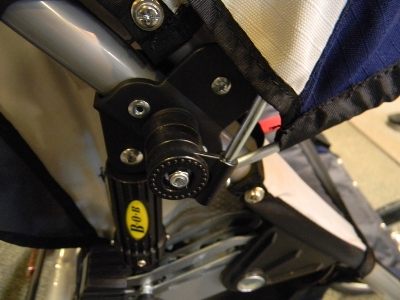
Designing the Collapsible
I started off with McMaster Carr, my favorite one stop shop for the discerning mechanical or manufacturing engineer. I'm waiting on an order right now, with a press button incremental hinge, an adjustable friction hinge, and a lever lock hinge.


